Salary history bans stop employers from anchoring new offers to old pay. That matters because the pay gap is still real: the U.S. Bureau of Labor Statistics reported in February 2026 that women earned 82.1% of men’s median weekly earnings in 2025. If your hiring team still asks about prior compensation, you are taking on avoidable legal risk and you may be importing yesterday’s inequities into today’s offers.
This guide covers where salary history laws apply, what counts as a risky pay history question, and how multistate employers can stay compliant without slowing hiring down. It is current to sources reviewed on April 12, 2026, but laws move quickly, so treat this as an operating guide and verify edge cases with counsel before rollout.
Key Takeaways
- HR Dive’s April 30, 2025 tracker counted 22 statewide bans and 24 local bans on pay history questions.
- New York, California, Illinois, Washington, and several others now pair salary history rules with pay transparency or wage range disclosure requirements.
- The safest recruiting script is simple: ask for salary expectations, not compensation history.
- Multistate employers usually fail in the ATS, background-check workflow, or recruiter script, not in the law itself.
- Evidence is directionally supportive but mixed: salary history bans can narrow pay gaps, but voluntary disclosure still weakens them.
Quick Answer
A salary history ban is a state or local rule that stops employers from asking candidates about prior pay, using known pay history to set compensation, or both. The safest default is to assume your team should not ask about prior salary, bonus, equity, or benefits at any stage of hiring unless counsel has cleared a narrow exception for a specific jurisdiction.
HR Dive’s April 2025 tracker counted 22 statewide bans and 24 local bans, while FindLaw’s February 23, 2026 review identified 18 states plus D.C. with broad statewide private-sector protections. There is still no general federal private-sector ban, which is why multistate employers need a jurisdiction-based process rather than a recruiter-by-recruiter preference.
Where Do Salary History Bans Apply Right Now?
According to HR Dive’s running tracker, updated April 30, 2025, employers were dealing with 22 statewide bans and 24 local bans. For a faster operating view, FindLaw’s legally reviewed February 23, 2026 overview identifies the jurisdictions with broad statewide protections and separates them from states that still leave coverage to local rules or public-sector policy.
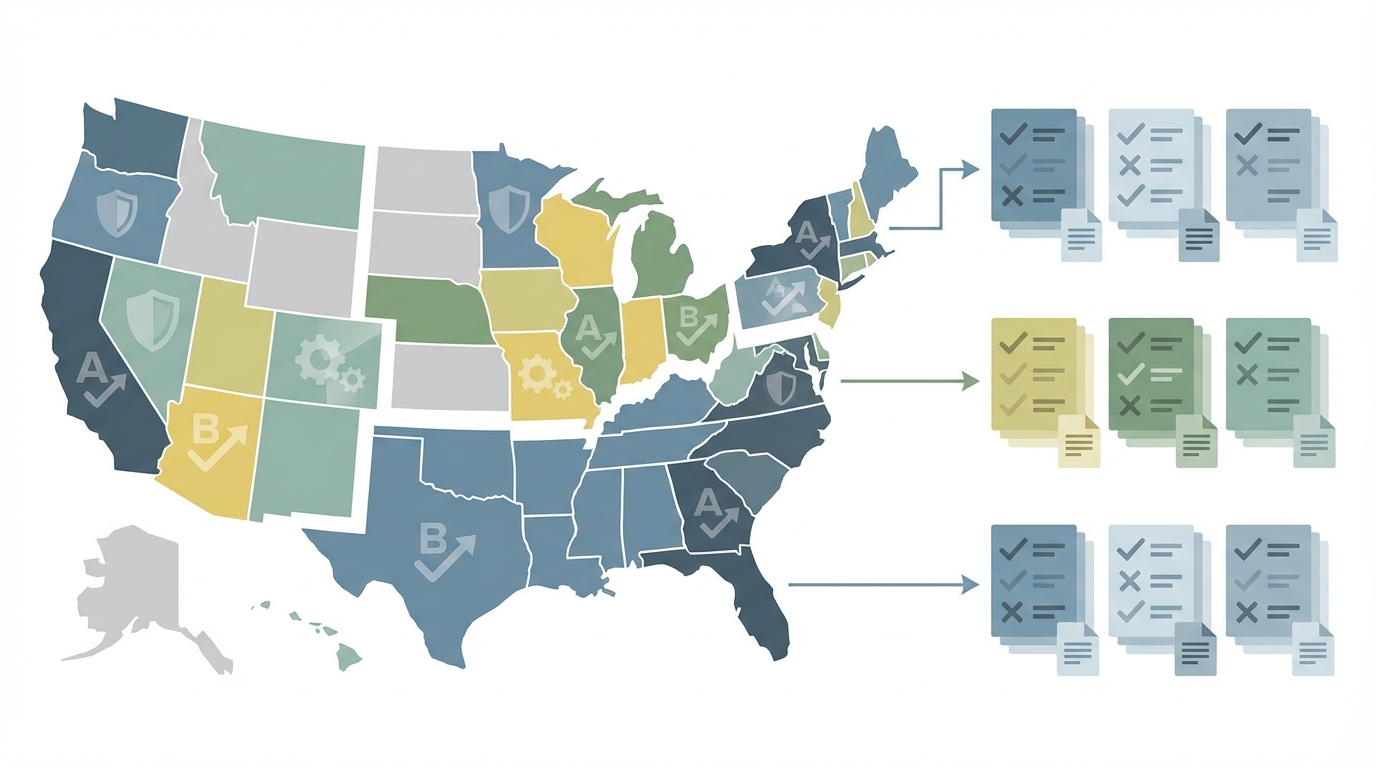
If you need the practical version, think in four buckets:
| Coverage bucket | Where it applies | What employers should assume |
|---|---|---|
| Broad statewide or districtwide private-sector rules | California, Colorado, Connecticut, Delaware, District of Columbia, Hawaii, Illinois, Maine, Maryland, Massachusetts, Minnesota, Nevada, New Jersey, New York, Oregon, Puerto Rico, Rhode Island, Vermont, Washington | Do not ask for pay history; in many places you also need to disclose a pay range or provide one on request |
| Public-sector or limited statewide rules | Alabama, North Carolina, Pennsylvania, Virginia, Michigan state departments | Coverage exists, but it is narrower than a full private-sector ban |
| Local-only overlays | Examples include San Francisco, Atlanta city agencies, Louisville metro government, New Orleans city, Kansas City, Cincinnati, Columbus, Toledo, Philadelphia, Lehigh County, and Salt Lake City | State law may be silent, but city or county law can still control the interview process |
| States that block local private-sector bans | Michigan and Wisconsin | You cannot rely on city rules to create extra private-sector restrictions there |
One pattern we see repeatedly across distributed talent teams is assuming that a “state-by-state salary history ban” question has a clean state-by-state answer. It doesn’t.
Local ordinances and public-sector carveouts make the real question: Where is the job performed, who is hiring, and what workflow triggers the pay discussion?
Broad statewide protection does not mean identical rules
Even among states with strong coverage, the details change:
- In New York, employers may not seek pay history, may not ask former employers for it, and may confirm it only after making an offer if the candidate voluntarily provides prior pay to support a higher number.
- In California, employers cannot ask for salary history, can ask for salary expectations, and must provide a pay scale on request. If a job may be filled in California, employers with 15 or more employees must include the pay scale in the posting.
- In D.C., the 2023 wage transparency law now combines salary history restrictions with a posting requirement and a benefits disclosure rule before the first interview.
That is why a generic “don’t ask compensation history” policy is necessary but not sufficient.
You also need workflow rules for when to share pay ranges, who can verify compensation, and how remote jobs are posted.
What Pay History Questions Are Still Off Limits?
In the jurisdictions with real salary history laws, employers generally cannot ask for past base pay, bonuses, commissions, benefits, or other compensation as a condition of screening or interviewing. New York’s Department of Labor says employers cannot seek wage or salary history from the applicant, the applicant’s current or former employer, or any agent of that employer. California says the same rule applies even if the employer uses an outside recruiter or background-check workflow.
The cleanest split is this:
Usually safe to ask
- “What compensation range are you targeting for this role?”
- “Does our posted range work for you?”
- “What mix of base salary, bonus, and equity would make this move worthwhile?”
- “If you leave your current employer, are there deferred compensation or unvested equity issues we should understand?”
Usually risky or prohibited
- “What are you making right now?”
- “What was your last base salary?”
- “How much bonus did you get last year?”
- “Can you send a pay stub so we can calibrate the offer?”
- “Can we verify your current compensation with your employer?”
This salary expectations vs. salary history distinction matters more than many hiring managers realize. California’s Labor Commissioner FAQ explicitly says employers may ask for salary expectations while banning questions about salary history information.
SHRM’s coverage of California’s law made the same practical point years ago: recruiters have to retrain themselves to negotiate around the role’s market value, not the candidate’s last paycheck.
A common mistake hiring managers make here is asking a legal question and then improvising themselves into an illegal follow-up. “What range are you targeting?” is fine. “Why is that above your current number?” is where the trouble starts.
Which States Pair Salary History Rules With Wage Range Disclosure?
The strongest compliance regimes now combine a salary history ban with pay transparency laws or wage range disclosure rules. That matters because once you stop asking about compensation history, you need a defensible way to talk about pay. In practice, that means having a documented pay band before the first recruiter screen.
Here is the operating snapshot from FindLaw’s 2026 review plus official state guidance:
| Jurisdiction | Employer threshold | What you must be ready to disclose |
|---|---|---|
| New York | 4+ employees | Salary ranges in job postings |
| California | 15+ employees | Pay scale in any posting that could be filled in California |
| Illinois | 15+ employees | Pay scale and benefits in postings |
| Washington | 15+ employees | Pay scale and benefits in postings |
| Massachusetts | 25+ employees | Wage range in postings, effective Oct. 29, 2025 |
| Minnesota | 30+ employees | Salary range and benefits description in postings |
| Hawaii | 50+ employees | Salary range in postings |
| Colorado | All employers | Pay range plus general benefits description in postings |
| Maryland | All employers | Wage range, benefits, and other compensation in postings |
| D.C. | All employers except D.C. and federal government | Minimum and maximum pay in postings plus healthcare benefit disclosure before first interview |
| Connecticut, Delaware, Maine, Nevada, New Jersey, Oregon, Rhode Island, Vermont | Varies | Range on request, after interview, before compensation discussion, or after offer depending on state |
This is where salary history laws and pay transparency laws start to merge operationally. If your recruiter cannot discuss compensation history and your hiring manager still has no approved range, the conversation falls apart. Recruitee’s salary-posting guide makes the practical case: range transparency reduces wasted interviews. Ongig’s job-posting best-practices article cites JobElephant data showing that jobs with salary information see 30% more apply starts per impression than jobs without it.
For teams already planning a larger compliance cleanup, this article pairs naturally with our guides to pay transparency laws in 2026, EEOC compliance in hiring, the broader recruitment compliance guide, and GDPR and recruitment.
How Should Recruiters Handle Salary Expectations vs. Salary History?
The best compliance play is to train every recruiter, hiring manager, and coordinator to treat salary expectations vs. salary history as a hard line. Ask what the candidate wants for the role. Do not ask what the candidate made in the last role. Then document the offered range before interviews start.

Here is the process that works best in practice:
- Remove compensation history fields from every intake point. That includes job applications, recruiter scorecards, ATS custom fields, offer-request forms, and background-check templates.
- Approve a pay band before the first screen. If the role has no range, the process is not ready to open.
- Train on scripts, not principles. Saying “don’t ask illegal questions” is too vague. Give interviewers approved language for pay expectations, relocation, and competing offers.
- Audit third parties. Agencies, sourcers, and background vendors count. New York and California both treat indirect collection as a problem.
- Handle remote roles by work location. California’s FAQ says the pay scale must be in the posting if the position may ever be filled in California, including remotely. That is the kind of rule that catches national employers off guard.
- Document voluntary disclosures. Several states allow employers to use pay history only if a candidate volunteers it unprompted, often to support a higher number after an offer. If that happens, note that the disclosure was voluntary.
- Separate internal moves from external recruiting. Some laws have exceptions or different standards for promotions and transfers.
- Tie the workflow back to interview training. If your managers need structure, build the pay conversation into the same playbook you use for questions to ask in an interview and job requisition discipline.
That caution is not theoretical. California’s Labor Commissioner tells employers to review job applications and train hiring personnel, and the 2024 Organization Science paper summarized by IZA found that 28% of workers volunteer salary history even when employers cannot ask.
In our experience, the ATS is usually the real offender. Recruiters remember not to ask illegal pay history questions in live conversation, but the old application form still asks for “current compensation” or the background vendor still verifies salary data by default. That is the gap you need to close first.
Do Statewide Salary History Bans Actually Improve Pay Equity Hiring?
The short answer is probably yes, but not automatically. Salary history bans take away one mechanism that can perpetuate pay gaps, but they do not replace good compensation design, range discipline, or pay transparency.
The baseline problem is still visible in the data. The Bureau of Labor Statistics reported in February 2026 that women earned 82.1% of men’s median weekly earnings in 2025.
That is better than prior decades, but it is not close enough to call solved.
Research points in the same direction:
- Sourav Sinha’s SSRN paper found salary history bans reduced the gender pay gap by 4.2 percentage points in hourly wages and 4.5 percentage points in weekly earnings.
- The NBER salary-history audit study found employers treat salary history as a signal not just of value, but of outside options. In plain English: once a number is on the table, it shapes the offer.
- The 2024 Organization Science paper summarized by IZA found 28% of workers volunteer salary history even when the employer cannot ask, and 47% said they would disclose if they believed other candidates were doing it.
That last point is the operational catch. A salary history ban can narrow one path to inequity, but it weakens quickly when recruiters hint for disclosure or candidates feel pressure to reveal compensation history anyway.
This is also why salary history rules work best when paired with broader pay equity hiring habits:
- publish ranges where the law requires it,
- define compensation logic before interviews,
- train recruiters to stay on future pay, not past pay,
- and audit final offers for pattern drift.
Workable’s illegal interview question guide is useful here because it treats salary history the way it should be treated: as one part of a bigger “train your managers before they improvise” problem.
What Should Candidates and Recruiters Do When the Law Is Unclear?
FindLaw’s 2026 overview notes that some states still rely on city or county ordinances, and California’s official FAQ applies pay-scale disclosure to roles that may be filled remotely in California. When the law is unclear, the safest move is to act like the stricter rule applies.
That is almost always the lower-risk choice, and in a market moving toward pay transparency, it is usually the better candidate experience too.
For recruiters:
- lead with the approved pay band,
- ask whether the range works,
- never request compensation history documents,
- and log any voluntary disclosure as voluntary.
For candidates:
- redirect to expectations if asked about prior pay,
- ask for the salary range if the law gives you that right,
- and document the conversation if you think a recruiter crossed the line.
For employers building a national process, the cleanest policy is a unified one: no pay history questions, posted or shareable pay ranges, and one compensation intake standard for every role.
It is simpler to manage than a patchwork of exceptions, and it aligns with where the law is going anyway.
One more practical point: if your team is already updating hiring workflows, also clean up adjacent documents. Offer letters, interview guides, requisitions, and compliance playbooks all need to reflect the same compensation rules.
Otherwise the old language survives in some forgotten template and creates risk later. That cleanup usually belongs in the same workstream as offer letter standards and recruiter training.
Frequently Asked Questions
Is asking for salary expectations legal if salary history is banned?
Usually yes. California explicitly says employers may ask about salary expectations even though they cannot ask about salary history. The safe version is future-facing: ask what range the candidate is targeting, not what they earn today.
Can an employer use pay history if a candidate volunteers it?
Sometimes. New York and California both allow limited use of voluntarily disclosed salary history in certain situations, especially after an offer is on the table. But the disclosure has to be voluntary and unprompted, not teased out by a recruiter.
Do salary history bans apply to remote jobs?
They often do. California’s FAQ says the pay scale must appear in the posting if the role may be filled in California, including remotely. Remote hiring is exactly where a one-size-fits-most recruiting script starts to break down.
What is the biggest compliance mistake employers make?
Leaving an old compensation-history field buried in the ATS or vendor workflow. Teams often fix the live interview script and forget the application, background-check, or offer-request form that still collects prohibited information.
Are salary history bans the same as pay transparency laws?
No. Salary history bans limit what employers can ask or use about past compensation. Pay transparency laws require employers to share pay ranges in postings or during the hiring process. Many jurisdictions now combine both.
Bottom Line
Salary history bans are no longer a niche employment-law issue. HR Dive tracks 22 statewide bans and 24 local bans, and BLS still shows women earning 82.1% of men’s median weekly pay in 2025.
That makes these rules a front-line recruiting operations issue that touches requisitions, job postings, screen scripts, offer approvals, and vendor workflows.
If you only remember three things, make them these:
- stop asking about compensation history,
- build the pay band before interviews start,
- and run your process as if the strictest applicable rule controls.
That approach will keep you closer to compliance, closer to pay equity, and closer to the candidate experience standards job seekers increasingly expect.